

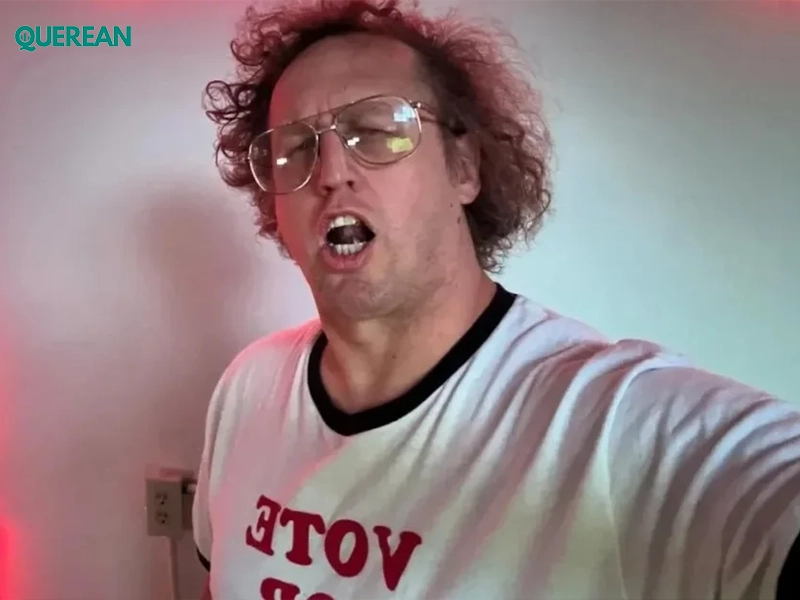
If you’ve been searching “patrick w cutler net worth”, you’re not alone. His online fame has pushed a lot of curiosity in one direction: “How much is he actually worth?”
As a U.S.-based financial writer at Querean, I’m going to keep this simple and honest. Patrick W. Cutler is not a public-company CEO with quarterly filings. So there is no official “net worth statement” sitting on the internet. Instead, what we can do is look at the public signals of a creator business and build a realistic range.
This article is written to be helpful, not hype-y. I’ll show you what’s verifiable, what’s guesswork, and how I arrive at a reasonable estimate.
Table of Contents
Quick take: my best estimate of Patrick W Cutler’s net worth
Based on publicly visible monetization signals (creator pricing, social reach indicators, fan-request activity, and film distribution), I’d place Patrick W Cutler’s estimated net worth in the range of $750,000 to $2.5 million.
That’s a range on purpose. Creator income is spiky. Expenses can be high. Taxes are real. And personal finances (like real estate, debt, and investments) are usually private.
Still, with the size of his audience and multiple revenue channels, a high six-figure to low seven-figure net worth is a reasonable “financial analyst” range—without pretending we know his bank balance.
Who is Patrick W Cutler?
Patrick W. Cutler is a U.S. entertainer and creator known for comedy content and a recognizable persona tied to an impression/parody of the cult movie character “Napoleon Dynamite.” He’s also connected to indie filmmaking and creative projects.
Multiple public profiles describe him as a filmmaker, entertainer, and content creator, with roots in Montana and ties to Alaska and Pittsburgh.
He also became a topic of viral conversation after a widely shared “arrest” story circulated online—later described as fake/AI-generated by coverage discussing the situation.
That combination—viral reach plus internet curiosity—usually triggers the “net worth” searches. It’s basically the modern celebrity cycle.
The big problem with “net worth” for internet creators
Here’s the truth most net worth articles skip: net worth is not the same thing as income.
Net worth is what you own minus what you owe. It can include cash, investments, property, equipment, and the value of business assets. It can also be reduced by debt, taxes owed, or production costs.
For creators, the numbers get messy fast because:
Creators can have strong revenue but also huge expenses. Travel, editing, equipment, contractors, agents, platform fees, and production budgets add up.
Income can swing wildly month to month. One viral streak or one brand deal can change a quarter.
A lot of creator income is not public. Sponsorship contracts, licensing deals, ad splits, and private bookings usually aren’t shared.
Even if you know what someone charges, you still don’t know how often they book it.
So when you see a single “exact net worth number” online, treat it like entertainment unless there’s real documentation behind it.
What we can verify about Patrick W Cutler’s public footprint
To estimate wealth responsibly, I start with what’s visible and repeatable.
Patrick W Cutler has public signals across a few categories: social reach, creator pricing, fan-request platforms, and film distribution.
One widely shared profile-style report noted he has over 1.3 million TikTok followers and more than 1.2 million Instagram followers.
He also appears on an influencer marketplace page with listed deliverable prices and an analytics section showing 1.5M followers, 250k average views, and 5.0% engagement (as displayed on that platform).
And he has a public fan-request listing on Cameo showing:
A starting personalized video price (displayed in yen on the page view I captured)
Business video pricing
Over 500 reviews, a strong rating, and recent activity signals like average video length and “last completed video.”
For indie film distribution, there are also public storefront and streaming listings for “Redgate”, including credits, availability, and a DVD listing with price and release info.
Finally, his own website bio-style page describes ongoing work in comedy and film projects, including “Bad Napoleon” and “Redgate,” plus touring.
That’s enough to build a financial range without inventing facts.
A quick snapshot table of the public signals
Here’s the “Querean” way to look at it: not “how famous,” but “how monetizable.”
| Public signal | What it shows (publicly) | Why it matters financially |
|---|---|---|
| Social reach | Reported audience size in the millions across TikTok/Instagram | Larger reach improves negotiating power for sponsorships and bookings |
| Influencer marketplace pricing | Listed rates for IG/TikTok posts, Lives, UGC, plus a platform-reported analytics snapshot | Pricing gives a baseline for what brands might pay per deliverable |
| Cameo listing | Price floor, business pricing, 24-hour delivery option, 500+ reviews, and recent completed activity | Indicates ongoing demand and repeatable income (even if modest per order) |
| YouTube channel presence | Subscriber count and volume of uploads (as publicly displayed in search results) | Ad revenue is possible, plus channel supports sponsorship value |
| Film distribution | Streaming store pages and DVD commerce listing with price | Suggests some revenue stream from IP, even if indie-scale |
| Creator economy benchmarks | Average brand payments vary by platform | Helps sanity-check what “normal” payouts can look like |
This isn’t a full financial statement. But it’s a strong “public footprint” list.
How Patrick W Cutler likely makes money
Now let’s talk about income streams—the real drivers behind “patrick w cutler net worth.”
Sponsored content and brand partnerships
For creators with a large audience, sponsorships are often the biggest line item.
On his influencer marketplace listing, there are visible package prices such as:
- Instagram Reel: $1,000
- TikTok Video: $800
- TikTok Live: $500
- Instagram Story: $500
And more, including UGC deliverables at lower price points.
Those numbers matter because they give us a floor for monetized content. In practice, creators often negotiate bundles, usage rights, exclusivity, and multi-post packages. So the real contract value can be higher than a simple one-post rate.
Also, industry payout data shows that average creator payments vary by platform, with TikTok and YouTube often paying higher per payment than Instagram in some datasets.
So if Patrick is consistently doing brand work, the math can scale quickly. Even a few deals a month can become meaningful annual income.
At the same time, sponsorship income can be uneven. Brands pause budgets. CPMs shift. Platforms change policies. So it’s a powerful stream, but it’s not always stable.
Fan-request income: Cameo-style personalized videos
This is one of the most “trackable” creator income sources because the platform shows public signals like price and review count.
Patrick’s Cameo listing (shown as “Napoleon Dynamite Impersonator” on the page view) displays:
- Personal video starting price: ¥7,485+
- Business video starting price: ¥38,186+
- Reviews: 4.94 (514)
- Joined: Feb 06, 2023
- Average video length: 00:56
- And recent delivery activity signals.
Since the page view shows prices in Japanese yen, it helps to translate that for U.S. readers. Using a USD/JPY historical reference around 155.22 yen per $1 (example reference point), the personal video price displayed works out to roughly $48, and the business video price displayed works out to roughly $246.
Now here’s the money part many people miss: platforms take a cut. One industry report states Cameo takes a 25% cut of the booking fee, with the rest going to talent.
So even if a video is ~$48, the creator’s share might be closer to ~$36 before taxes.
Still, 500+ reviews suggests meaningful volume.
A conservative “minimum gross” thought experiment is simple:
If those 514 reviews roughly equaled 514 paid videos at about $48 each, that would be about $24,000+ in gross bookings on Cameo across the life of the account. That’s not a perfect measure because not everyone leaves reviews, and pricing can change. But it sets a realistic floor for what that channel could have generated.
Also, the reviews show strong fan satisfaction, which supports repeat demand:
“Amazing! Wife loved it. Hilarious! Thank you!”
That kind of social proof usually keeps bookings coming.
Film and streaming income: “Redgate” and other projects
Film income is harder to estimate than people think, especially for indie work.
However, we do have proof the film exists and is distributed.
An Apple TV listing for “Redgate” includes credits that list Patrick W. Cutler as director and writer.
A DVD commerce listing shows “Redgate” with:
- Price: $15.99
- Runtime: 86 minutes
- Credits listing Patrick W. Cutler as director and writer
- A listed “street date” of 2025-09-02 (as displayed on that page)
- A Roku listing also shows options including rent pricing (for example, “from $1.99” shown on the page).
So, yes, there’s a product and distribution. That’s a real economic asset.
But film money often comes in slower and smaller chunks than people assume. Revenue is split across platforms, distributors, and sometimes investors. Also, production costs can eat a lot of upfront cash.
From a net worth perspective, though, the key idea is this: film IP can become an asset. Not always a huge one, but a real one. If a project keeps selling or gets licensed, it can produce long-tail cash flow.
Live shows, touring, and appearances
- In his own bio-style writeups, Patrick describes touring and being active in comedy.
- He’s also been mentioned in local/event coverage tied to appearances and promotional collaborations.
- Live income can matter a lot because:
- It’s not tied to platform algorithms.
- It often pays faster.
- It can be packaged with merch, meet-and-greets, or event sponsorships.
It does come with travel costs and time, but it’s one of the better “stability” levers for creators who have a recognizable character.
Subscriptions and direct-to-fan support
Creator businesses usually push toward subscriptions because it stabilizes income.
Patrick’s “Bad Napoleon” web presence connects to fan content distribution, and subscription-style access is part of how many creators monetize beyond ads.
I’m not going to pretend we know exact subscription revenue. But from a financial planning standpoint, it’s an important category because it can turn a viral moment into repeat monthly cash flow.
A quick reality check: viral attention doesn’t always mean massive wealth
This is where financial reality hits.
A creator can look huge online and still be building wealth slowly if:
- They reinvest heavily into production.
- They travel constantly.
- They have inconsistent sponsorship volume.
- They don’t run pricing like a premium brand.
- They’re still paying off debts or funding projects.
So when we estimate “patrick w cutler net worth,” we should be careful not to equate fame with cash.
What people said online: real quotes that show fan demand (and controversy)
Online comments are not financial statements, but they do help you understand demand and engagement.
For example, in coverage of the viral “arrest” post, there were comments defending the humor and others criticizing AI use. These are direct quotes shown in that coverage:
“They arrested you for practicing midwestern culture this is so terrible,”
Why does this matter financially? Because engagement—good or bad—can drive views. And views are what feed sponsorship interest.
Creators with strong engagement often monetize better than creators with just follower counts.
My data-driven net worth estimate: how I get to a range
At Querean, I prefer a range built from scenarios. It’s more honest than a single number.
Here’s the approach:
Step 1: Use public pricing as anchors (Cameo pricing, influencer marketplace packages).
Step 2: Estimate booking volume with conservative, moderate, and aggressive assumptions.
Step 3: Subtract platform fees and typical creator expenses.
Step 4: Convert annual profit into a net worth range using realistic accumulation assumptions.
I’m not using fancy formulas here. I’m using “real-world creator business” logic.
Scenario table: possible annual income range (illustrative)
These are not claims about what he earns. This is what his public footprint could support.
| Scenario | Sponsorships & brand deals | Fan videos (Cameo-like) | Film & IP income | Live/events | Estimated annual business revenue |
|---|---|---|---|---|---|
| Conservative | $30k–$75k | $10k–$25k | $2k–$10k | $5k–$20k | ~$47k–$130k |
| Moderate | $75k–$180k | $25k–$60k | $10k–$35k | $20k–$60k | ~$130k–$335k |
| Higher | $180k–$400k+ | $60k–$120k | $35k–$100k | $60k–$150k | ~$335k–$770k+ |
Why these ranges are reasonable:
Public package pricing supports the idea that sponsorship deliverables could be in the hundreds to low-thousands each.
Cameo pricing supports a ~$48 price floor (as displayed), and review volume suggests ongoing bookings.
Film income is hardest to predict, but distribution listings and direct sales pages confirm it exists.
Turning income into net worth: what typically happens in the real world
Even if a creator has $300,000 in annual revenue, that does not mean $300,000 in personal income.
Here’s what usually hits the profit line:
- Platform fees (example: Cameo fee percentage has been reported at 25%).
- Federal and state taxes (especially for self-employed creators).
- Production expenses (equipment, travel, editors, booking help).
- Health insurance and retirement savings (many creators fund these themselves).
Because of that, a creator might only keep 30%–60% of revenue as true profit, depending on how the business is run.
Then net worth depends on what they do with profit. Spending it all creates lifestyle, not wealth. Investing it builds net worth.
So when I estimate Patrick W Cutler’s net worth, I assume he keeps a reasonable portion and has been building for more than one viral month.
That’s how I land at $750,000 to $2.5 million as a fair “public-footprint-based” range.
Why you might see “Napoleon Dynamite 2” talk and what it means (or doesn’t)
One more important clarification, because it affects how people interpret his earning potential.
There have been rumors online about a “Napoleon Dynamite” sequel. However, reporting has also pushed back on the idea that a real sequel is actively happening, describing it as rumor-driven rather than confirmed.
From a net worth angle, the reason this matters is simple:
- An official studio sequel credit can dramatically change a person’s financial trajectory.
- A parody persona can still make strong money, but it’s a different business model.
So, don’t assume “Napoleon Dynamite” franchise money is part of Patrick W Cutler’s finances unless there is clear confirmation.
What could push Patrick W Cutler’s net worth higher in the future
If you’re watching this as a “where is the money going next” story, these are the biggest potential accelerators.
A bigger premium sponsorship strategy. His public pricing is relatively accessible, but stronger brand positioning can raise rates significantly over time.
Scaling business videos. Business bookings are priced higher than personal videos on fan platforms, and that usually has better ROI for time.
More film distribution wins. If an indie film finds a bigger audience, licensing can become meaningful. We already know “Redgate” has distribution and direct sales.
Recurring subscription income. That smooths out the rollercoaster of social media.
What could pull net worth down (yes, this happens too)
- Net worth isn’t a one-way climb. A few things can hit creators fast.
- Over-investing in production without return.
- Tax surprises, especially if quarterly estimates aren’t handled well.
- Platform dependence, where algorithm changes reduce income.
- Legal or IP issues if a persona crosses into disputes (not saying this is happening—just naming a general creator risk).
The “Querean” money lesson here: creators build wealth when they treat content like a business
When I look at Patrick W Cutler’s ecosystem, the smartest takeaway is not the number. It’s the structure.
He’s connected to multiple income lanes: social platforms, fan requests, and film distribution.
That matters because diversification is what keeps creators financially alive when one platform dips.
If you’re a creator reading this, the money play is simple:
- Build one audience.
- Then monetize it in more than one place.
Also, protect your upside by owning something. A film, a show, a series, a character brand. IP is where wealth can compound.

FAQs
What is Patrick W Cutler’s net worth in 2026?
A reasonable estimate, based on publicly visible monetization signals, is $750,000 to $2.5 million. It’s a range because his private assets, debts, and contracts are not public.
Is Patrick W Cutler’s net worth officially confirmed anywhere?
Not in any official public filing like you’d see for a public company executive. Most creator net worth numbers online are estimates unless they’re backed by verified disclosures.
How does Patrick W Cutler make money?
Based on public signals, likely income streams include sponsored content (brand deals), fan-request videos (Cameo-style platforms), film distribution and sales (“Redgate”), and live appearances.
How much does Patrick W Cutler charge on Cameo?
His Cameo listing shows a personal video price starting at ¥7,485+ and a business video starting at ¥38,186+ (as displayed on the page view).
About how much is ¥7,485 in U.S. dollars?
Using a USD/JPY reference around 155.22 JPY per $1, ¥7,485 works out to roughly $48. This is an estimate because exchange rates and displayed currencies vary.
Does Cameo take a fee from creators?
One reported breakdown states Cameo takes 25% of the booking fee, with the remainder going to talent.
Was Patrick W Cutler actually arrested?
Coverage discussing the viral “arrest” post stated the mugshot was fake and the clip appeared AI-generated, with no official reports confirming an arrest in that story.
Is Patrick W Cutler the actor from the original Napoleon Dynamite movie?
He’s widely described as known for an impersonation/parody of the character. Separate reporting has also clarified that sequel rumors don’t equal confirmed studio projects.
What is “Redgate” and what is Patrick W Cutler’s role?
“Redgate” is a film with listings showing Patrick W. Cutler credited as director and writer, with distribution and a DVD listing for sale.
Why do different websites give different net worth numbers?
Because creator finances are mostly private. Without contracts, tax returns, or audited statements, most numbers are educated guesses—and many are just made up.
Final word from Querean
If you came here hoping for a neat single number for patrick w cutler net worth, I get it. That’s how the internet trains us.
But the more useful answer is a transparent estimate plus the reasoning behind it.
Based on public monetization signals—creator pricing, fan-request activity, and film distribution—Patrick W Cutler’s likely net worth sits somewhere in the high six figures to low seven figures, and $750,000 to $2.5 million is a defensible range.

